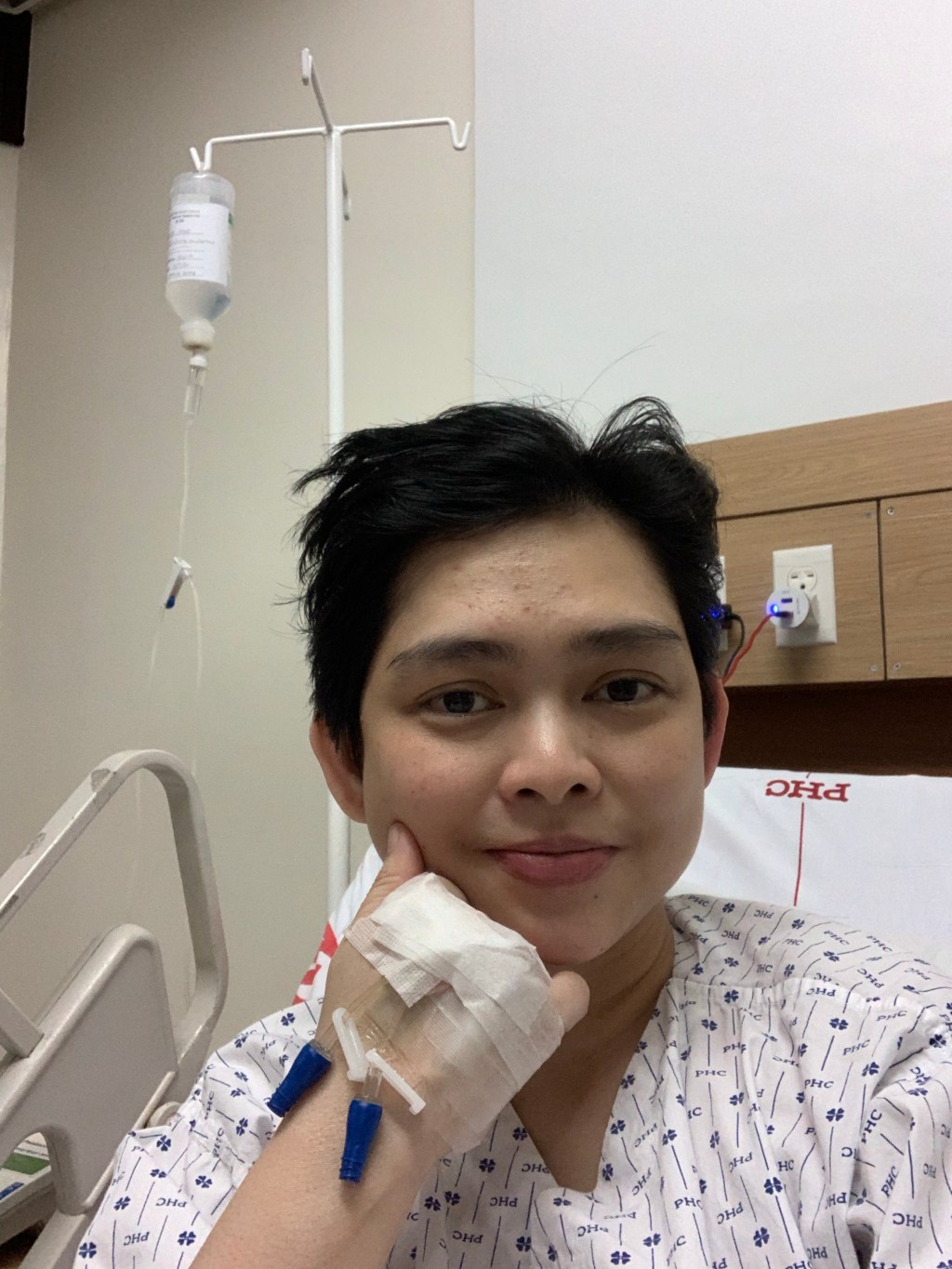
It was March 25, 2020. It was my 14th day of self-quarantine from an exposure to a COVID-positive colleague. I had been self-medicating my asthma exacerbation at home with steroids, inhalers, and antibiotics for the past 4 days, but they weren’t working. I could barely catch my breath despite almost hourly nebulizations, and I could feel the panic clutching at my throat. Despite my fear of getting COVID at the emergency room–or worse, that I already had it–I knew that I could no longer put off going to the hospital. Fortunately, I had been readying for this possibility for days, so my bags were all packed, and I was dressed even at 5 in the morning. There was only one thing left to do. I opened the door and called down the hallway to my husband sleeping in the other room (he was also under quarantine). “Papa. We have to go. Now.”
Although he had been asleep, he was at the door almost instantly, rubbing his eyes. “What’s wrong?”
I could barely talk. “Can’t breathe.”
He looked up at me in alarm, and then started pulling on his clothes. I nebulized while he readied himself, because I knew that I wouldn’t be able to do it once I got to the hospital. COVID suspects are not allowed to nebulize because it causes respiratory secretions to aerosolize. For good measure, I also popped two tablets of methylprednisone like candy.
I called the pulmonary fellow on duty on our drive over to the hospital, so that the staff would be expecting me. It was hard breathing through the surgical mask, but I didn’t want to be completely unprotected. I incessantly checked my things to make sure that I hadn’t forgotten anything; my purse was like a portable pharmacy, complete with almost every asthma medication known to man.
When we pulled in the driveway, the masked guards came over with welcoming smiles, recognizing me, but I waved them away hastily. “I’m here as a patient, PUI,” I gasped. They backed away in alarm as we hurried to the emergency room. It was still early–not even six in the morning–so it was thankfully empty except for about three nurses wrapped head to foot in PPE, and a custodian cleaning the floor. I looked around me. The booth where the nurses sat was enclosed by a clear acrylic shield, and the patient chairs situated in front of them were all six feet away from each other. There was a huge ventilation fan on one side blowing air back out through the door. The air smelled faintly of bleach, which was probably the solution that the custodian was using. The whole place looked reassuringly clean.
I sat down in front of the booth and one of the nurses immediately started asking me questions. She made me answer a data form. Another came over and started taking my vital signs. I told them who I was, and that I was suffering from asthma in exacerbation and that I had been exposed to a COVID patient two weeks previously. A short while later, the pulmonary fellow arrived, also dressed in full PPE, and asked me some more questions. He then called the Pulmonologist on duty for instructions. After a while, he came back to me.
“The doctor wants a chest X-ray.”
I nodded in agreement. But I stipulated that since I didn’t have the breath or energy to go to the X-ray department, could they get the portable machine to do it right there at the ER? The fellow said he’d do what he could.
While we were waiting, someone else arrived–a mother and her child. The girl was thin and weak-looking, about six years old. Both were wearing cloth masks. As they took their places in front of the both, we moved back. I was gratified to see that the custodian cleaned the chairs that we vacated first before they sat down. Unfortunately, the minimal exertion of changing places forced me to use my inhaler again. It was already my third as-needed dose for that morning.
Soon enough, the X-ray machine arrived. After the picture was taken, we crowded round the screen and stared at the image of my chest. It looked relatively clean to my eyes, but that didn’t necessarily mean anything. It would still depend on what the radiologist said.
After another short while, the Pulmonologist–a mentor and friend–herself called me. “There are infiltrates on the lower part of your right lung,” she said gently. I felt my heart sink like it was made of lead. “I recommend that we admit you now and treat it as pneumonia. Unfortunately, we can’t rule out COVID at this point, because you were exposed, so we will treat you for that too. Okay?”
“Okay, doctor,” I said. There was really nothing else to say. I looked across at my husband and mouthed, admit. He shrugged in resignation. Little did we know that once I was brought to my room at the PUI ward later that day, we wouldn’t see each other in person for the next seven days.
 Waiting to Exhale: Lung Doc on Call
Leave a comment